Ways to earn
How to make money from videos, and where translation fits.
A video earns in a few well-known ways: ads, platform programs, sponsors, your own products and client work. Translating it doesn't add a new one. It lets you try each of them again, with a video you already made, on viewers who speak another language. If you want to earn money by translating videos, there are two honest routes: dub your own, or localize a client's as a paid service. Below are twelve legitimate models, the rule behind each, and what a second language changes.
The models
Twelve legitimate ways to monetize videos.
The first six are about a channel: how it gets paid and how it adds a language. The next three sell something: a course, a service, an ad. The last three depend on the format and on who owns the material. Each card says who it suits, what it needs and the rule to know.
Ads through the YouTube Partner Program
- Channels with long videos
- 1,000 subscribers for ads and Premium
YouTube shares ad revenue with channels in its Partner Program: creators receive 55% of net revenue from ads on the watch pages of their public videos.1 The ads and Premium tier takes 1,000 subscribers and either 4,000 qualified watch hours in the last 12 months or 10 million qualified Shorts views in the last 90 days.2 For new applicants to that tier from February 1, 2027, the hours and qualified Shorts views double.3 A second language can add views. It doesn't lower the bar.
YouTube monetization requirementsYouTube Shorts
- Vertical clips
- Reach first, income second
- Original Shorts only
Revenue from ads in the Shorts feed is pooled and shared out by eligible engaged views in each country. Creators keep 45% of their allocation, and views of non-original Shorts, such as re-uploads of other creators' videos, don't count.4 One creator network reported about $0.33 per 1,000 engaged Shorts views in the US in 2025, after YouTube's share.5 From February 1, 2027, a channel will need at least 10 million qualified Shorts views in the last 90 days to share in monthly Shorts ad and Premium revenue. Missing that cutoff alone leaves other revenue unchanged.3
YouTube Shorts monetizationAudio tracks on your own channel
- An existing YouTube channel
- Needs advanced features
- Views stay on one video
Add dubbed audio tracks to videos you already published. Every track sits on the same video, so it keeps one link and one view count; viewers get the track in their preferred language by default and can switch in the player settings. It needs access to advanced features and an audio-only file about as long as the video.6 DubSync includes a separate M4A audio download for your dubbed video.
Multi-language audio guideA channel for each language
- Creators with a back catalog
- Starts from zero subscribers
- Reviewed as a whole channel
Publish your own dubbed videos on a separate channel, with titles and thumbnails made for that audience. YouTube lists this among its strategies for global audiences and warns that every channel needs ongoing attention.7 The new channel has to reach the Partner Program thresholds itself,2 and the reused-content policy looks at it as a whole.8
Multi-language YouTube channelSponsorships and brand deals
- Channels with a clear audience
- Depends on who watches, and where
- Must be disclosed
A brand pays to reach your viewers, so an audience you can show in a new country is something to pitch to brands that sell there. We found no reliable public rate card by country, so treat any price you see quoted as an estimate. YouTube requires you to select the paid promotion option, which adds a label at the start of the video.9 Check the sponsor contract before you dub an old sponsored video.
YouTube sponsorshipsAffiliate reviews in new markets
- Review and tutorial channels
- Product must be sold there
- Disclose in the dubbed language
A review dubbed for a new audience can point to an affiliate program that works in that audience's country. The link, the price and the availability have to be localized by hand. The US Federal Trade Commission says a connection to a seller should be disclosed in the language the endorsement is made in, so the dubbed version needs its own disclosure.10
Your own courses and products
- Teachers, coaches, experts
- You set the price
- Text materials need a translator
A course you already recorded can be sold again as an edition in another language. Large platforms already do this: Coursera lists more than 100 courses with AI dubbing in Spanish, French, German or Portuguese.11 A dub covers the lecture videos. Slides, worksheets, the sales page and student support still need a person who knows the language.
Online course translationLocalization as a service
- Freelancers and small agencies
- Paid per project
- Client's rights in writing
Sell finished language versions to creators, course authors and companies: the dub, a native-speaker check, translated titles and a file ready for each platform. One dubbing company profiled in 2023 typically charged an upfront translation fee and took 10% of future ad revenue from the dubbed channels.12 What the client pays for is the checking and the project work, more than the dub itself.
Sell dubbing as a serviceVideo ads for new markets
- Brands, apps, online stores
- Short clips, small tests
- Local ad rules apply
Dub an ad that already works and test it with a small budget before paying for a local shoot. In an article about its own ad tools, Google reports that a mobile game and app developer saw a 45% higher click-through rate in Germany after dubbing its video ads into German; in the same article, culturally adapted ads in Korea converted better than plain translations.13 One vendor case is not a rule. Claims, prices and disclaimers need a local check, and the voice talent in the ad has to agree to the dub.
Video ad localizationOriginal animation and kids' content
- Animators and studios
- No real lips to match
- Made-for-kids limits ads
A drawn or 3D character's mouth movements are stylized, so a dubbed voice usually stands out less than on a filmed face. An episode you own can be released in several languages, provided the voice actors agree to the dub. Know the trade-off: videos set as made for kids get no personalized ads, comments or channel memberships, and YouTube says this may reduce revenue for some creators.14 Songs need a human adaptation.
Animation and cartoon dubbingVideo podcasts
- Interview and talk shows
- Every guest must agree
- Cost grows with length
Release episodes or short highlights in another language, in voices created from the hosts' own. Spotify piloted this kind of voice translation in 2023 for episodes of a few large shows, first in Spanish, with French and German announced to follow.15 Long, fast, overlapping talk is hard material for a dub, so start with clips. DubSync accepts audio or video episode files. Upload the original file; RSS feeds cannot be imported.
Translate a podcastLicensed and Creative Commons material
- Curators and licensees
- Written permission or an open license
- Must add something of your own
You can earn from someone else's work only with explicit written permission that grants commercial use, or under a license such as Creative Commons that allows it.16 A translation generally counts as an adaptation,17 so a license marked ND, which allows no adaptations, rules out a dub, and one marked NC rules out commercial use.18 Rights don't settle monetization: the reused-content policy still expects significant commentary, substantive changes or added educational or entertainment value.8 The people speaking in the video have to agree to the dub as well.
Can you monetize dubbed videos?
Not among the twelve: fan funding and shopping. YouTube also lists channel memberships, Super Chat and Super Stickers, Super Thanks, Shopping and a share of YouTube Premium revenue as ways to earn in the Partner Program, each with its own eligibility requirements.19 They depend on viewers who come back, so a second language matters there only after it has built an audience.
The platform rules quoted on this page are YouTube's. Other platforms run their own programs on their own terms; the guide on how much TikTok pays covers one of them.
Historical CPM per 1,000 ad impressions
Ad income starts with an advertiser paying to reach a viewer. YouTube's help page on ad revenue says that CPM, the cost of 1,000 ad impressions, shifts with where your views come from: more views from places with lower CPMs can lower channel CPM.20
In median rates for videos uploaded in 2024, US advertisers paid ~7× as much per 1,000 YouTube ad impressions as advertisers in Mexico, ~9× as much as in Brazil and ~12× as much as in India.21
An English dub makes a video understandable to English speakers. English is spoken in the US and the UK, as well as in India and the Philippines, where advertisers paid less in the same sample.21 The calculator uses your own Studio RPM and view count.
Historical CPM measures advertiser spending per 1,000 ad impressions. Use your own YouTube Studio RPM and matching views to estimate creator revenue.
Source: IsThisChannelMonetized via Digital Information World, Aug 2025.21
Where translation fits
What a second language changes, and what it doesn't.
The video stays the same. Who can follow it changes.
A dub replaces the speech and keeps the picture and the background audio. Play the clip and switch the language to hear the difference. A second language can change four things:
- Who can watch: people who don't speak your language can follow the video without reading.
- Which audio tracks viewers can choose. Check views by audio language in Studio.
- What you can offer: a sponsor, a course buyer or a client in another market has a version to look at.
- How long a video stays useful: an old upload can be released again in each new language.
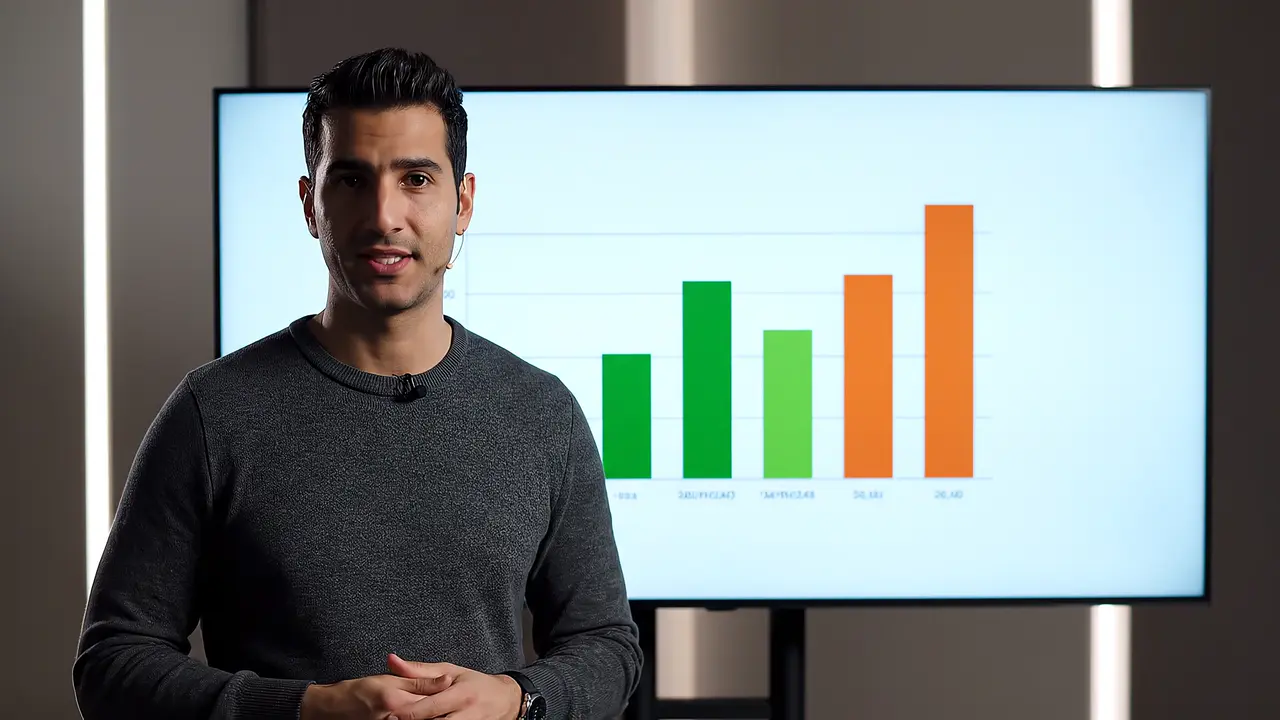
What is said: Advertisers pay different rates in different countries. Same video, same views, but a very different market.
What is said: Los anunciantes pagan tarifas diferentes en distintos países. Mismo video, mismas vistas, pero un mercado muy diferente.
What is said: Os anunciantes pagam taxas diferentes em países diferentes. Mesmo vídeo, mesmas visualizações, mas um mercado muito diferente.
AI-created illustrative scene. Not a customer result.
Lip-sync is an optional paid extra.
The limits
What you may not do, in any language.
Most bad advice about earning with translation starts with someone else's video. These are the lines, and where they come from.
Yours to translate
- Videos you made and own, in any format.
- A client's video, dubbed for that client and handed back.
- Someone else's work, with written permission that covers commercial use and the voices in it.
- Public-domain material, or Creative Commons material whose license allows commercial use and adaptations, with commentary or substantive changes of your own and the consent of anyone speaking in it.
Not a way to earn
- Dubbing another creator's video, a film, an anime or a cartoon and uploading it as yours.
- Compilations of other people's clips with a new voice and nothing else added.
- The same templated video produced in bulk and multiplied across languages.
- Recreating a person's voice in another language without their agreement.
Examples and edge cases are in the guide Can you monetize dubbed videos?
Where to start
Two honest ways to earn money by translating videos.
Either the videos are yours, and a second language opens them to another audience. Or they belong to a client who pays you to localize them. Licensed material is the one exception, and it starts with written permission.
One video, one language, one way to publish
The same four steps work for your own channel and for a client's video.
Start with a video that already works
Pick one that still gets views and doesn't lean on wordplay or local references. For client work, ask for the original file and written confirmation of the rights and of every speaker's consent.
Choose the language from evidence
Look at the countries already in your analytics, or at where the client sells. English is often the answer, not always. The lesson on choosing a first language shows how to decide.
Dub it, then have a native speaker listen
DubSync has no script editing, so the check happens on the finished MP4. Names, numbers and the call to action are where a mistake costs the most.
Publish one way and measure
An audio track on the same video, a language channel, another platform, or a delivery to the client. Give it a few weeks before you judge it, and only then add another language.

What is said: Mis clientes me envían su video. Yo les entrego la versión en inglés revisada y lista para publicar.
What is said: My clients send me their video. I deliver the revised English version ready for publishing.
What is said: Meus clientes me enviam seu vídeo. Eu entrego a versão em inglês revisada e pronta pra publicação.
AI-created illustrative scene. Not a customer result.
Lip-sync is an optional paid extra.
Earning guides
What the platforms pay, and what they ask for.
The entry rules and the numbers for each program, with the official pages as sources. Read these before you plan around ad revenue.
 EarningMake money on YouTubeHow channels earn on YouTube, what each option requires and where to check your revenue in Studio.
 EarningYouTube monetization requirementsPartner Program thresholds for early access and for ads and Premium, plus the February 2027 changes.
 EarningHow much YouTube paysUse your channel’s RPM to estimate revenue for 1,000 or one million views. Compare historical advertiser CPM by country.
 EarningYouTube Shorts monetizationHow the Shorts ad pool works, what creator RPM per 1,000 engaged views measures, and the eligibility changes announced for 2027.
 EarningHow much TikTok paysCreator Rewards eligibility by market, what counts as a qualified view and other ways to earn on TikTok.
 EarningYouTube sponsorshipsHow to get a YouTube sponsorship, how deals are priced and disclosed, and what to check before dubbing one.
Translation guides
Earning with a second language.
Running a channel in several languages, selling localization to clients, and where the reused-content line sits for dubbed and automated channels.
 EarningMulti-language YouTube channelAudio tracks or a second channel per language: what YouTube says, real cases and a checklist.
 EarningSell dubbing as a serviceSell video dubbing to clients: the offer, native review, contract points and pricing from real cost.
 EarningCan you monetize dubbed videos?What you may dub and monetize, and where YouTube's reused content and AI label rules draw the line.
 EarningYouTube automation and faceless channelsWhat YouTube automation means, which faceless channels can monetize, and where dubbing fits.
Data and calculator
Check the numbers yourself.
Estimate revenue with your own Studio RPM, or explore historical advertiser CPM in 49 countries, with the method written out.
Lessons that help
Read these before you publish a second language.
Which language to start with, what YouTube's automatic dubbing already does on your channel, and how to add your own audio track.
 LessonBest language for a YouTube channelUse your YouTube Studio audience data to pick a first dubbing language and test it on five videos.
 LessonYouTube auto dubbingWhat YouTube auto dubbing is and how to turn it off, review it or replace it with your own track.
- GuideMulti-language audio guideAdd an English audio track, or choose a separate channel.
Questions
Questions about earning with translated video
Can I earn money by translating other people's videos?
Only with the owner's agreement, in writing. YouTube asks for explicit written permission that grants commercial use before you monetize someone else's content.16 Even then, monetization isn't settled: the reused-content policy is separate from permission, so a channel that only re-voices other people's uploads can still be refused.8 The clean versions of this idea are a license from the owner that also covers the voices, or doing the localization as a paid service and handing the files back.
Can I get paid for translating videos as a freelancer?
Yes, as a service for people who own their videos. The client pays for a finished language version: the dub, a check by a native speaker, and translated titles and descriptions. Get the client's rights and every speaker's consent in writing before you start. DubSync includes the dubbed MP4, M4A audio and automatic SRT subtitles in the dubbing language; adding the text to the video takes another editor. The guide on localization as a service covers what clients buy, what to put in writing and how to price the work.
How much more does a video earn once it is translated?
Nobody can tell you in advance. It depends on whether new viewers find the video, where they watch and what the topic is worth to advertisers. YouTube reported that creators who uploaded multi-language audio saw, on average, over 25% of their watch time come from views in a non-primary language.22 That is an average across the creators who use the feature, not a forecast for one channel.
Will views in another language lower my RPM?
RPM can move either way. Viewer geography can affect advertiser CPM, while RPM measures your revenue per 1,000 views.20 Check geography, views, RPM and total revenue in Studio. You can also track results such as sponsorships or course sales.
If I dub into English, will viewers in the US see my video?
Not automatically. An English version makes the video understandable to them; it doesn't put it in front of them. A translated title, description and thumbnail can help viewers understand what the video is about. English is also widely spoken in India and the Philippines, where advertiser CPM was lower in the 2024 sample.21 Check geography in Studio to see who watched. The lesson on reaching a US audience goes through it step by step.
Is an AI-dubbed video allowed to earn on YouTube?
The monetization policies don't mention dubbing. They exclude reused content and mass-produced or repetitive content.8 YouTube itself offers multi-language audio6 and switches on automatic dubbing by default for eligible creators.23 The test is the video itself, not the language of its audio: a copied or templated video is a problem in any language.
Do I have to label a dubbed video as AI-generated?
On YouTube, cloning your own voice for voice-overs or dubs is among the examples that don't need the altered-content label; realistic content that makes a real person appear to say something they didn't say does.24 That example covers your own voice, so read YouTube's list before you decide on a video with other speakers. Other platforms have their own rules. Separately, DubSync asks you to confirm that everyone whose voice is in the video agreed to the dub.
What does DubSync do here, and what doesn't it do?
DubSync makes the dubbed file. You upload a video you have the rights to (MP4, MOV or M4V, up to 150 minutes and 1 GB), choose one of 28 languages, see the minutes and the cost, confirm your rights and every speaker's consent, and download an MP4 with a voice created from each speaker, the background audio kept and no visible watermark. DubSync includes a dubbed MP4, M4A audio and automatic SRT subtitles in the dubbing language. It does not post to any platform, there is no script editing and you cannot paste a link. It is paid per input minute.
Sources
- YouTube Help. YouTube partner earnings overview. Accessed Oct 3, 2026.
- YouTube Help. YouTube Partner Program overview & eligibility (help article 72851). Accessed Oct 5, 2026.
- YouTube Help. Changes to the YouTube Partner Program (help article 12843009). Accessed Oct 5, 2026.
- YouTube Help. YouTube Shorts monetization policies. Accessed Oct 3, 2026.
- AIR Media-Tech. What RPM Can You Expect from Shorts in 2026?. Published Jan 23, 2026; accessed Nov 22, 2026.
- YouTube Help. Add Multi-language features to your videos (help article 13338784). Accessed Oct 3, 2026.
- YouTube Help. Pick a strategy for reaching global audiences (help article 6070467). Accessed Oct 5, 2026.
- YouTube Help. YouTube channel monetization policies (help article 1311392). Accessed Oct 3, 2026.
- YouTube Help. Add branded content restrictions & disclosure labels (help article 154235). Accessed Oct 5, 2026.
- US Federal Trade Commission. FTC's Endorsement Guides: What People Are Asking. Accessed Oct 5, 2026.
- Coursera. AI-dubbed courses: learn in your language. Accessed Oct 5, 2026.
- Rest of World. YouTube has created a multimillion-dollar dubbing economy. Published Mar 6, 2023; accessed Oct 5, 2026.
- Think with Google. How businesses use AI to gain a local edge and succeed abroad (June 2025). Accessed Oct 5, 2026.
- YouTube Help. Set your channel or video's audience (help article 9527654). Accessed Oct 5, 2026.
- Spotify Newsroom. Spotify's AI Voice Translation Pilot Means Your Favorite Podcasters Might Be Heard in Your Native Language. Published Sep 25, 2023; accessed Oct 5, 2026.
- YouTube Help. What kind of content can I monetize? (help article 2490020). Accessed Oct 5, 2026.
- Creative Commons. Frequently Asked Questions: What is an adaptation?. Accessed Oct 5, 2026.
- Creative Commons. Sharing Openly, Sharing Globally (the six Creative Commons licenses). Accessed Oct 5, 2026.
- YouTube Help. How to earn money on YouTube (help article 72857). Accessed Oct 5, 2026.
- YouTube Help. Understand ad revenue analytics (help article 9314357). Accessed Oct 3, 2026.
- Digital Information World (data compiled by IsThisChannelMonetized). YouTube CPM Rates in 2025: How Location Shapes Earnings. Published Aug 11, 2025; accessed Nov 22, 2026.
- YouTube Official Blog. Unlock a world of viewers with multi-language audio. Published Sep 10, 2025; accessed Oct 3, 2026.
- YouTube Help. Use automatic dubbing (help article 15569972). Accessed Oct 3, 2026.
- YouTube Help. Disclosing use of GenAI content. Accessed Oct 4, 2026.
Keep exploring
Related pages
- ProductAI video translatorTranslate your video into 28 languages with a voice created from each speaker.
- ProductAI dubbingWhat AI dubbing is, how it compares with subtitles and a studio dub, and how to dub your own video.
 SectionUse casesWhat you can dub: cartoons, ads, courses, podcasts, films and short videos.
- SectionExamplesDemo clips with their original and dubbed tracks.
- SectionLessonsPractical lessons on translating and dubbing a video.
- PricingMonthly plans or a one-time Minutes Pack, priced by input minute.
Start with one video
Pick the video that already works. Hear it in another language.
Upload it, see the minutes and the cost, then decide.
Upload my videoOnly upload files you have the rights to, with every speaker's permission.