Guide · YouTube Shorts
YouTube Shorts monetization: requirements and how much Shorts pay
To monetize YouTube Shorts, a channel has to be in the YouTube Partner Program. The Shorts route takes 1,000 subscribers and 10 million qualified Shorts views in the last 90 days.1 There is no fixed rate per view: YouTube pools each month's Shorts Feed ad revenue, divides it by engaged views country by country, and creators keep 45% of their allocation.2 One company's 2025 averages run from $0.008 per 1,000 Shorts views in India to $0.328 in the United States.3
Updated Oct 5, 2026
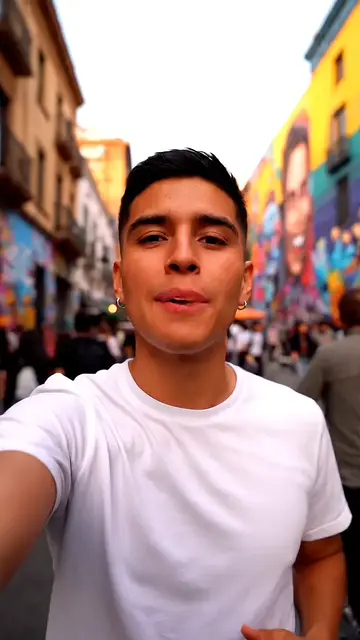
What is said: Esse short eu gravei em português. A versão em inglês saiu do mesmo arquivo e eu não precisei gravar de novo.
What is said: I recorded these shorts in Portuguese. The English version came from the same file, and I didn't need to record it again.
What is said: Este corto lo grabé en portugués. La versión en inglés salió del mismo archivo y no tuve que grabar de nuevo.
Demo clip: an AI-generated scene with a fictional character. Dubbed with VDub v2, the model DubSync runs; lip-synced tracks use VSync v2.
Lip-sync shown in these examples is an optional paid add-on, separate from the dubbing trial.
YouTube Shorts monetization requirements
Shorts ad revenue is part of the YouTube Partner Program, so the requirements are the program's. There are two routes in, and both need 1,000 subscribers.1
- Subscribers
- 1,000
- on either route
- Shorts route
- 10 million
- qualified Shorts views in the last 90 days
- Long-video route
- 4,000
- qualified watch hours in the last 12 months
Qualified Shorts views are views of public Shorts that appear in the Shorts Feed. Private, unlisted and deleted Shorts, ad campaigns and image posts don't count. Watch time in the Shorts Feed doesn't count toward the 4,000 hours, so a Shorts-only channel has to reach the Shorts number.1
On either route, you also have to:1
- Follow the YouTube channel monetization policies.
- Live in a country or region where the program is available.
- Have no active Community Guidelines strikes.
- Turn on 2-Step Verification for the Google Account.
- Have access to advanced features.
- Link an active AdSense for YouTube account, or be ready to set one up.
Reaching the numbers doesn't admit a channel automatically. Every application is reviewed, and YouTube says a decision typically takes about a month.1
In eligible countries, an earlier level opens at 500 subscribers and 3 public uploads in the last 90 days, with either 3 million qualified Shorts views in 90 days or 3,000 qualified watch hours in 12 months. It brings fan funding and YouTube Shopping, not a share of ad revenue.5 Our Partner Program guide covers the long-video route.
How Shorts ad revenue is split
Ads in Shorts run between videos in the feed, not on a particular Short, so YouTube shares the revenue through a pool, in four steps.2
The month's ad revenue is pooled
Revenue from ads that run between videos in the Shorts Feed is added together each month.
The Creator Pool is set aside
Revenue linked to engaged views of monetizing creators' Shorts goes into the Creator Pool, minus a part for music licensing where a Short uses music. Revenue linked to Shorts from creators who aren't monetizing stays out.
The pool is divided country by country
A creator's allocation is their share of the engaged views on monetizing creators' Shorts in each country.
You keep 45%
The share is applied to your allocation, whether or not you used music.
In YouTube's hypothetical example, a fifth of a country's Shorts use one music track, so 90% of the month's Shorts ad revenue there goes into the Creator Pool. A creator with 1 million of that country's 100 million engaged views is allocated 1% of the pool and keeps 45% of that.2
YouTube Analytics shows estimated daily Shorts Feed ad revenue.2 Its RPM for Shorts is per 1,000 engaged views and combines several revenue sources, not only ads.6
YouTube Premium is shared in a similar way: 45% of the net Premium revenue allocated to Shorts, by each creator's share of subscription Shorts views in a country.2 Long videos differ: the creator receives 55% of the net revenue from ads on their own videos.7
How much do YouTube Shorts pay per 1,000 views?
YouTube publishes the formula, not a rate. The most detailed public figures we found come from AIR Media-Tech, a company that says it works with more than 3,000 creators: 2025 averages for 19 countries, from thousands of its channels.3 They are RPM figures: creator revenue per 1,000 Shorts views, after YouTube's share.
- United States
- $0.328
- per 1,000 Shorts views, 2025 average
- United Kingdom
- $0.166
- per 1,000 Shorts views, 2025 average
- Brazil
- $0.045
- per 1,000 Shorts views, 2025 average
- India
- $0.008
- per 1,000 Shorts views, 2025 average
| Country | Per 1,000 Shorts views | US figure is | 1 million views, illustrative |
|---|---|---|---|
| United States | $0.328 | Reference | $240–410 |
| Switzerland | $0.205 | 1.6× | $150–260 |
| Australia | $0.193 | 1.7× | $140–250 |
| South Korea | $0.185 | 1.8× | $130–240 |
| United Kingdom | $0.166 | 2.0× | $120–210 |
| Canada | $0.165 | 2.0× | $120–210 |
| Germany | $0.163 | 2.0× | $120–210 |
| Hong Kong | $0.147 | 2.2× | $110–190 |
| Japan | $0.144 | 2.3× | $100–180 |
| Taiwan | $0.140 | 2.3× | $100–180 |
| Austria | $0.135 | 2.4× | $100–170 |
| New Zealand | $0.113 | 2.9× | $80–150 |
| France | $0.102 | 3.2× | $75–130 |
| Brazil | $0.045 | ~7× | $30–60 |
| Mexico | $0.040 | ~8× | $30–50 |
| Turkey | $0.024 | ~14× | $18–30 |
| Philippines | $0.023 | ~14× | $17–30 |
| Indonesia | $0.012 | ~27× | $9–15 |
| India | $0.008 | ~41× | $6–10 |
Source: AIR Media-Tech.3 It doesn't define the countries or say whether “views” means engaged views. We read the countries as where the views came from, which is how YouTube divides the pool. “US figure is” divides the US average by each market's: 2.0× the United Kingdom's, ~7× Brazil's, ~41× India's. The last column is our illustration, not a forecast: the average applied to 1 million views, with an assumed band of 25% either side.
Treat these as an order of magnitude, not a rate card. They average very different channels, and one channel can sit well above or below them.
Ad prices are the likely reason for the gap. YouTube says CPMs vary by geography because advertisers compete more in some locations than in others.6 In a separate dataset of median CPMs for videos uploaded in 2024, the figure for the United States was ~12× India's per 1,000 ad impressions.8 CPM is what advertisers pay before YouTube's share, not creator income, so don't set it beside the Shorts figures. Compare both formats in the calculator, or look up a country in the ad rate table.
Does music lower what a Short pays?
Not for the creator who uses it. Music is covered when the Creator Pool is formed, not out of one creator's allocation.2
| Goes into the Creator Pool | Covers music licensing | |
|---|---|---|
| Short with no music | All of it | Nothing |
| Short with 1 track | Half | Half |
| Short with 2 tracks | One third | Two thirds |
After that split, your allocation counts all of your engaged views and the 45% share is the same, with or without music. What music does is make the pool smaller for everyone. “Music” here means content made available or claimed by YouTube's music industry partners, and music generated with Dream Track.2
Which Shorts views count, and which don't
Payments use eligible engaged views, not every view. YouTube's Shorts monetization policies draw the line like this.2
Counts toward your share
- Engaged views of Shorts you made yourself, from the date you accepted the Shorts Monetization Module.
- All of those views on a Short that uses music. Music doesn't reduce your count.
- Views of Shorts between one and three minutes long, if they were uploaded after October 15, 2024.
Doesn't count
- Non-original Shorts: unedited clips from other people's movies or TV shows, reuploads of other creators' videos, compilations with nothing original added.
- Artificial or fake views, such as views from automated click or scroll bots.
- Views of Shorts that don't meet the advertiser-friendly content guidelines.
- Shorts over one minute that contain claimed content. These are blocked and can't be monetized.
Translation doesn't change the list: a new audio track on someone else's Short is still someone else's Short. See what you may dub and monetize.
The public view counter is a different number. Since August 24, 2026, YouTube counts a view the moment a video starts to play, in every format. It says earnings are still based on engaged views, and eligibility on qualified views.9
What changes on February 1, 2027
YouTube has announced Partner Program updates that take effect on February 1, 2027.4 These are the ones that touch Shorts.
| Until January 31, 2027 | From February 1, 2027 | |
|---|---|---|
| Earning from the Shorts pool in a given month | Program membership and the accepted Shorts Monetization Module | The same, plus 10 million qualified Shorts views in the last 90 days |
| Joining through Shorts | 1,000 subscribers and 10 million qualified Shorts views in 90 days | 1,000 subscribers and 20 million qualified Shorts views in 90 days, for new applicants |
| Joining through long videos | 1,000 subscribers and 4,000 qualified watch hours in 12 months | 1,000 subscribers and 8,000 qualified watch hours in the last 365 days, for new applicants |
| Shorts ads an advertiser targets at 5 or fewer channels | No direct share: Shorts Feed ad revenue is pooled | Eligible creators keep 45% of the net revenue from that ad, in addition to pool earnings |
The monthly check uses the 90 days that end on the 15th of the month before the one being paid: for March earnings, the 90 days to February 15. A channel under the number gets no share of the Shorts pool, or of Premium revenue for Shorts, that month.2 It stays in the program, and its other earnings, including long videos, are not affected. Channels already in the program keep their status when the entry thresholds rise.4
Partners have to accept the updated terms in YouTube Studio by January 31, 2027. A feature whose terms are not accepted stops earning on February 1 until they are. YouTube also plans Shorts incentive programs that may offer bonuses for YouTube Shopping and production credits for brand deals.4
Where a dubbed Short fits
Dubbing doesn't lower a threshold or raise the share. It can change who watches, and since the pool is divided country by country, the same number of engaged views pays differently depending on where they come from.2
The same Short for viewers in another country
Play the clip and switch the language under it. DubSync takes the original file of your Short (MP4, MOV or M4V), detects the spoken language and returns a dubbed MP4 in the one you pick from 28 languages. Each speaker gets a voice created from their own, similar but not identical, and background audio is kept. Input minutes are counted by the second, once for each language.
- Add it to the same Short. YouTube's multi-language audio takes extra audio tracks on a single video or Short. It needs access to advanced features and an audio-only file, so extract the audio from the MP4 first.10
- Post it as a new Short on a channel for that language. Thresholds are counted per channel, so a new channel starts from zero.1 See one channel or two.
- Use the same MP4 on TikTok and Reels, which have their own programs and rules.
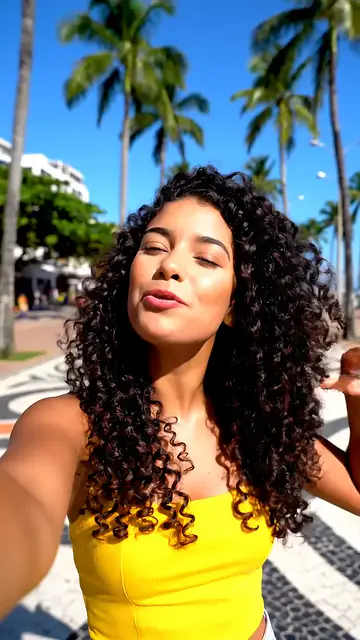
What is said: Mismo video, otro idioma. Así llego a personas que no hablan español sin grabar de nuevo.
What is said: Same video, different language. This way I reach people who don't speak Spanish without recording again.
What is said: Mesmo vídeo, outro idioma. Assim chego a pessoas que não falam espanhol sem gravar de novo.
Demo clip: an AI-generated scene with a fictional character. Dubbed with VDub v2, the model DubSync runs; lip-synced tracks use VSync v2.
Lip-sync shown in these examples is an optional paid add-on, separate from the dubbing trial.
English is not automatically a high-rate audience. It reaches viewers in the United States and the United Kingdom, and also in India and the Philippines, where the same source shows some of the lowest Shorts figures.3 Dub two or three Shorts that already did well, then check in YouTube Analytics where the views come from.
A dub changes the audio only. Burned-in captions and on-screen text stay in the original language, and DubSync doesn't make subtitle files or post to YouTube on your behalf. Lip-sync is an optional paid add-on for a finished dub, priced per minute, with the quote shown before it starts.
Plans from $4.90/month. You see the minutes and the cost before anything starts. See pricing
Questions before you start
How many views do you need to monetize YouTube Shorts?
How much do YouTube Shorts pay for 1 million views?
There is no fixed amount. With one company's 2025 averages and an assumed band of 25% either side, 1 million Shorts views from the United States would correspond to $240–410 for the creator, from the United Kingdom to $120–210 and from India to $6–10.3 These are illustrations from a single source, not a forecast for any channel.
Can a channel that joined through long videos earn from Shorts?
When are Shorts earnings paid?
With the rest of a channel's YouTube earnings, through AdSense for YouTube.2 Finalized earnings for a month are added to the balance between the 7th and 12th of the next month and paid out between the 21st and 26th, if the balance has reached the payment threshold and nothing is holding the payment.7
Can I monetize a Short I dubbed into another language?
A Short you made stays your own content when you dub it, and the same rules apply in any language. YouTube lets you upload audio tracks in other languages to a single video or Short.10 What the Shorts policy excludes is non-original content, such as reuploads of other creators' videos.2 Dubbing someone else's Short doesn't make it yours.
Sources
- YouTube Help. YouTube Partner Program overview & eligibility (help article 72851). Accessed Oct 5, 2026.
- YouTube Help. YouTube Shorts monetization policies. Accessed Oct 5, 2026.
- AIR Media-Tech. What RPM Can You Expect from Shorts in 2026?. Published Jan 23, 2026; accessed Oct 5, 2026.
- YouTube Help. Changes to the YouTube Partner Program (help article 12843009). Accessed Oct 5, 2026.
- YouTube Help. Overview of the expanded YouTube Partner Program (help article 13429240). Accessed Oct 5, 2026.
- YouTube Help. Understand ad revenue analytics (help article 9314357). Accessed Oct 5, 2026.
- YouTube Help. YouTube partner earnings overview. Accessed Oct 5, 2026.
- Digital Information World (data compiled by IsThisChannelMonetized). YouTube CPM Rates in 2025: How Location Shapes Earnings. Published Aug 11, 2025; accessed Oct 5, 2026.
- YouTube Help. How engagement metrics are counted (help article 2991785). Accessed Oct 5, 2026.
- YouTube Help. Add Multi-language features to your videos (help article 13338784). Accessed Oct 5, 2026.
Keep exploring
Related pages
 EarningYouTube monetization requirementsToday's Partner Program thresholds, the review, content rules and what doubles in February 2027.
 EarningHow much YouTube paysWhat YouTube pays per view, per 1,000 and per 1 million views, by viewer country, with sourced ranges.
 EarningHow much TikTok paysNo official TikTok pay rate: Creator Rewards rules, the eight countries, payouts and other ways to earn.
- DataYouTube CPM by countryMedian ad rates by country, with sources and method.
- CalculatorYouTube money calculatorIllustrative ranges for your views, by country and format.
 ProductInstagram Reels translatorDub your own Reels from the original file, and see when Meta's free translation is enough.
Start with one Short
Test one Short in a second language.
A Short uses only its own length in input minutes. You see the minutes and the cost before you confirm.
Upload a ShortOnly upload videos you have the rights to, with every speaker's permission.