AI dub for anime
AI anime dubbing for the anime you made or licensed.
Upload an episode, a short or a trailer that you made or hold dubbing rights to. DubSync detects the spoken language, translates Japanese dialogue into English, Spanish, Portuguese or another of its 28 target languages, gives each speaker a voice created from the original performance, keeps your music and effects, and returns a dubbed MP4. It is not for series you only watch.
Upload my episodePro: 7 days free for eligible new subscribers, with 60 minutes. Card required. Then $29.90/month; cancel before the trial ends to pay nothing. Trial minutes expire after 7 days.
Upload an MP4, MOV or M4V. You see the minutes and the cost before anything starts.
What is said: この物語は日本語で作りましたが、今はね、英語でも聞くことができますね。
What is said: This picture story was made in Japanese, but now you can listen to it in English too.
What is said: Este video fue hecho en japonés, pero ahora también se puede escuchar en inglés.
What is said: Este vídeo foi feito em japonês, mas agora pode ser ouvido em inglês também.
Demo clip: an AI-generated scene with a fictional character. Dubbed with VDub v2, the model DubSync runs; lip-synced tracks use VSync v2.
- 28 target languages
- Up to 150 min / 1 GB per video
- MP4 out, no visible watermark
- Background audio kept
- Pay per input minute
Can AI dub anime?
Yes, it can dub the dialogue. The acting is the hard part.
An AI anime dub replaces one layer of an episode: the spoken lines. The picture, the score and the effects stay as they are. Anime acting is more extreme than most video: whispers, shouted attack names, voices that break mid-sentence. No automatic dub carries all of that, and ours is no exception.
Where an AI voice holds up
- Narration, inner monologue and calm dialogue that was recorded cleanly.
- Slice-of-life scenes and comedy that comes from the situation, not from wordplay.
- Shorts, trailers, pilots and web episodes with a small cast.
- A first version for a new market, before you pay for a studio cast.
Where anime asks for more
- Screams, battle cries, sobbing and laughter. They are sounds more than sentences, and a dub built for speech may not carry them.
- A line that swings from a whisper to a shout. Expect a narrower range than a directed actor gives.
- Opening, ending and insert songs. Speech dubbing isn't made for singing.
- Crowd scenes, characters talking over each other and one actor playing two roles. Speakers are told apart automatically, so voices can get mixed up.
- Puns, honorifics and catchphrases. The translation is automatic and there is no script editing.
Viewers hear it when this goes wrong. In late 2025 Prime Video added AI-generated English dubs, labeled as a beta, to several anime series. Fans posted clips and complained, and a Gizmodo critic faulted the delivery and the timing and heard almost no emotion in the voices.1 Within days the English AI track for one of them, Banana Fish, was no longer offered.2 For your own work, test the most emotional scene first.
Rights come first
Whose anime is it?
An AI dub is a translation. US copyright law lists a translation among derivative works and gives the copyright owner the exclusive right to prepare them.3 The Berne Convention, an international copyright treaty, requires its members to treat translation as an author's exclusive right, with limited exceptions.4 This page is not legal advice.
Anime you made
- Yours to dub
- Ask your cast
Your own characters, script and animation: a short, a web series, a trailer, a game cutscene. If friends or hired actors voiced it, get their agreement before voices are created from their performances.
Anime you licensed
- Check the contract
- Cast consent too
A distribution deal does not always include a new language version. Check that the contract covers dubbing, the language, the territory and the platform. To monetize third-party content, YouTube requires explicit written permission that grants commercial use rights.5 Its reused content policy applies even when you have the original creator's permission, so a license settles copyright, not monetization.6
Can you monetize dubbed videos?Anime you watch
- Not yours to dub
A series with no dub in your language is still someone else's work. Dubbing and uploading it without the owner's permission infringes their copyright and breaks DubSync's acceptable use policy, and you don't have the cast's consent to new voices made from their performances. Crediting the studio or not monetizing does not change that.7
Japanese and back
Japanese to English, Spanish or Portuguese. Or your series into Japanese.
All languagesIt works in both directions
The clip at the top of this page has a Japanese original and English, Spanish and Portuguese dubs. This one goes the other way: an English original with a Japanese dub. Both are AI-generated demo scenes, not customer work. If you draw in an anime style and record in another language, a Japanese version is one more project.
Is your series on YouTube? Check YouTube's automatic dubbing first. For videos originally in Japanese it currently lists English as the only dubbing language, and it warns that its dubs can contain errors.10 If an English track on that YouTube video is all you need, start there. DubSync returns an MP4 that you post wherever you upload video.
- Names: check that family and given names come out in the order your subtitles and store pages use.
- Honorifics such as -san and -senpai have no direct equivalent. Listen to how they were handled.
- Attack names and invented terms can be translated when you wanted them kept, or the reverse.
Each language has its own page with a demo: Japanese, Spanish and Portuguese.
What is said: Hi, I'm Pip the Fox. My stories began in one language. Now, children can hear them in their own.
What is said: Hola, soy Pip el Zorro. Mis historias comenzaron en un idioma. Ahora los niños pueden escucharlas en el suyo.
What is said: Oi, eu sou Pip, a raposa. Minhas histórias começaram em um idioma. Agora as crianças podem ouvi-las no seu próprio.
Demo clip: an AI-generated scene with a fictional character. Dubbed with VDub v2, the model DubSync runs; lip-synced tracks use VSync v2.
How to dub anime with AI
From a finished episode to a dubbed MP4.
Export the episode without the songs
Render the final mix as MP4, MOV or M4V, up to 150 minutes and 1 GB. Leave out a sung opening and ending: minutes are counted for the whole file. For a first test, export one hard scene.
Upload it and choose a language
The spoken language is detected automatically. Pick one target language; a second language is a second project and uses the episode's minutes again.
Check the minutes and confirm your rights
You see the input minutes and the cost before anything starts. You confirm that the video is yours to dub and that every voice owner agreed.
Review it with a native speaker
Download the MP4, which has no visible watermark. Listen to the loud and emotional scenes, then ask a native speaker to check names, invented terms and jokes.
Put the songs back and publish it yourself
Add the opening and ending in your editor and upload the file where your audience is. DubSync doesn't publish to any platform.
Two kinds of dub
Studio dub or AI dub?
A studio dub is a new performance. An AI dub translates the performance you already have. A release can use both: an AI dub to find out where the audience is, a studio dub where it turns out to be large.
| Studio dub | AI dub with DubSync | |
|---|---|---|
| Performance | Actors cast for each role and directed line by line | A voice created from each original speaker: similar, not identical |
| Script | Adapted by a writer for timing, jokes and tone | Automatic translation. No script editing, so you check the result |
| Retakes | A director can ask for another take | No retakes and no voice controls: you judge the finished MP4 |
| What you pay for | Studio time, a cast, a director and a mix | Input minutes of the original video, per target language |
| Fits best | A flagship release, or a title sold to a broadcaster | Shorts, trailers, pilots, back catalog and testing a new market |
Before you upload
The cast has a say too.
A character's voice is an actor's work. In October 2024 a group of Japanese voice actors launched a campaign against AI output made from their voices without permission, and the Japan Actors Union is one of its two lead endorsers. The campaign's statement says that use without permission is unwelcome even when it comes from fans.11 A license for the picture is not consent from the cast, so get both in writing.
On labels: YouTube requires creators to disclose realistic content that was meaningfully altered or generated with AI, and says disclosing does not limit a video's audience. Its examples of what needs no disclosure include an AI-generated animation inside a fully animated video and cloning your own voice for dubs.12 That second example is about your own voice, so read the rule with your cast in mind. Other platforms have their own rules.
Questions
Questions before you start
Is an AI anime dub good enough to release?
It depends on the scene. Calm dialogue and narration are where an AI voice holds up. Screams, crying and songs are where it falls short, and there are no retakes. Listen to the whole episode, ideally with a native speaker, before you release it.
Can I dub an anime that has no dub in my language?
Only if you made it or hold a license that covers dubbing. A series you watch on a streaming service is not yours to translate, however much it deserves a dub. YouTube's copyright guidance says a translation of someone else's work usually still needs the owner's permission.7 DubSync asks you to confirm your rights before every dub, whatever you plan to do with the file.
Is a fandub allowed if I credit the studio and don't monetize it?
Not on DubSync, and credit does not make it allowed on YouTube either. YouTube says that giving credit, adding a disclaimer or not making money from a video does not give you the right to use someone else's work, and that only a court can decide whether a use counts as fair use.7 A fandub of a commercial series can also be blocked or claimed through Content ID.8
Does it dub Japanese into Spanish or Portuguese, or only into English?
Into English, Spanish, Portuguese or another of the 28 target languages. The spoken language is detected automatically, so you never set Japanese as the source. You choose one target language per project.
How is a season priced?
By the input minute: the length of each episode, once for each target language. Every episode and every language is its own project, there is no batch upload, and you see the minutes and the cost before each dub starts.
What happens to the opening and ending songs?
Background music is kept under the new dialogue, but speech dubbing isn't made for singing. Export the episode without the sung opening and ending, dub that file, and add the songs back in your editor. That also saves minutes, because the whole upload is counted.
Do I need lip-sync for anime?
Usually not. Most anime mouths are drawn in a few simple shapes, and those shapes still read as talking in a new language. Lip-sync is an optional paid add-on for a finished dub of up to 5 minutes per run, so a full-length episode is too long for it. It is priced per minute, the whole video is charged, and you see the quote before it starts. It works best with a clearly visible, naturally speaking face, so we don't recommend paying for it on drawn characters.
Can I fix a name or a catchphrase the translation got wrong?
No. DubSync has no script editing, so you can't correct a line in a finished dub. Test names, invented terms and catchphrases on a short clip before you dub a whole season.
Does DubSync add subtitles as well?
No. It returns a dubbed MP4 only, with no subtitles, captions or transcript. If your audience watches with subtitles, keep your subtitled version available next to the dub.
Plans from $4.90/month. You see the minutes and the cost before anything starts. See pricing
Sources
- Gizmodo. Amazon's Atrocious AI Anime Dubs Are a Dark Sign of Things to Come. Published Dec 1, 2025; accessed Oct 5, 2026.
- GamesRadar+. After widespread criticism for the use of AI voice actors, Amazon removes AI dub from anime series Banana Fish. Published Dec 2, 2025; accessed Oct 5, 2026.
- U.S. Copyright Office. Copyright Law of the United States (Title 17), Chapter 1: Subject Matter and Scope of Copyright (sections 101 and 106). Accessed Oct 5, 2026.
- World Intellectual Property Organization. Summary of the Berne Convention for the Protection of Literary and Artistic Works (1886). Accessed Oct 5, 2026.
- YouTube Help. What kind of content can I monetize? (help article 2490020). Accessed Oct 5, 2026.
- YouTube Help. YouTube channel monetization policies (help article 1311392). Accessed Oct 5, 2026.
- YouTube Help. Common copyright myths (help article 2797449). Accessed Oct 5, 2026.
- YouTube Help. How Content ID works (help article 2797370). Accessed Oct 5, 2026.
- YouTube Help. Understand copyright strikes (help article 2814000). Accessed Oct 5, 2026.
- YouTube Help. Use automatic dubbing (help article 15569972). Accessed Oct 5, 2026.
- NOMORE Mudan Seisei AI, a campaign by Japanese voice actors. NOMORE無断生成AI (campaign site, in Japanese). Published Oct 21, 2024; accessed Oct 5, 2026.
- YouTube Help. Disclosing use of GenAI content. Accessed Oct 5, 2026.
Keep exploring
Related pages
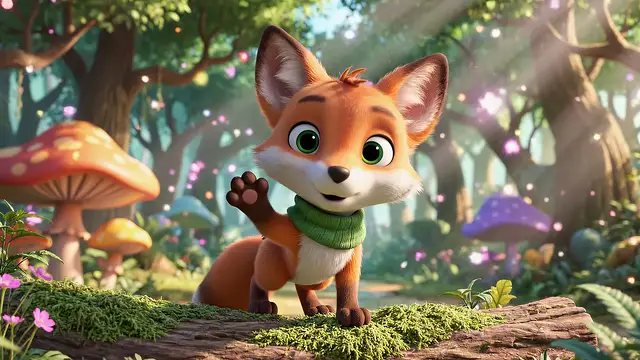 Use caseAnimation and cartoon dubbingDub your own cartoons: a voice per speaker, what to do with songs, lip-sync and made-for-kids rules.
 LessonDub vs sub for creatorsHow dubbing and subtitles compare on reach, accessibility and cost, and when to use both.
 EarningCan you monetize dubbed videos?What you may dub and monetize, and where YouTube's reused content and AI label rules draw the line.
 Use caseMovie translator for filmmakersDub a film you made or licensed: limits for feature-length files, festival rules, rights and cast consent.
- Translate video to JapaneseClips dubbed into Japanese, what to check in the result and how it works.
 ProductAI dubbingWhat AI dubbing is, how it compares with subtitles and a studio dub, and how to dub your own video.
Start with one scene
Dub the scene you are least sure about.
Upload it, see the minutes, then decide.
Upload my episodeOnly upload videos you have the rights to, with every speaker's permission.